COVERED PATIOS & OUTDOOR LIVING | NORTH TEXAS
Covered Patios & Outdoor Living in DFW
Outdoor Living, Made for North Texas
More shade in the afternoon. More room around the table. More reasons to step outside.
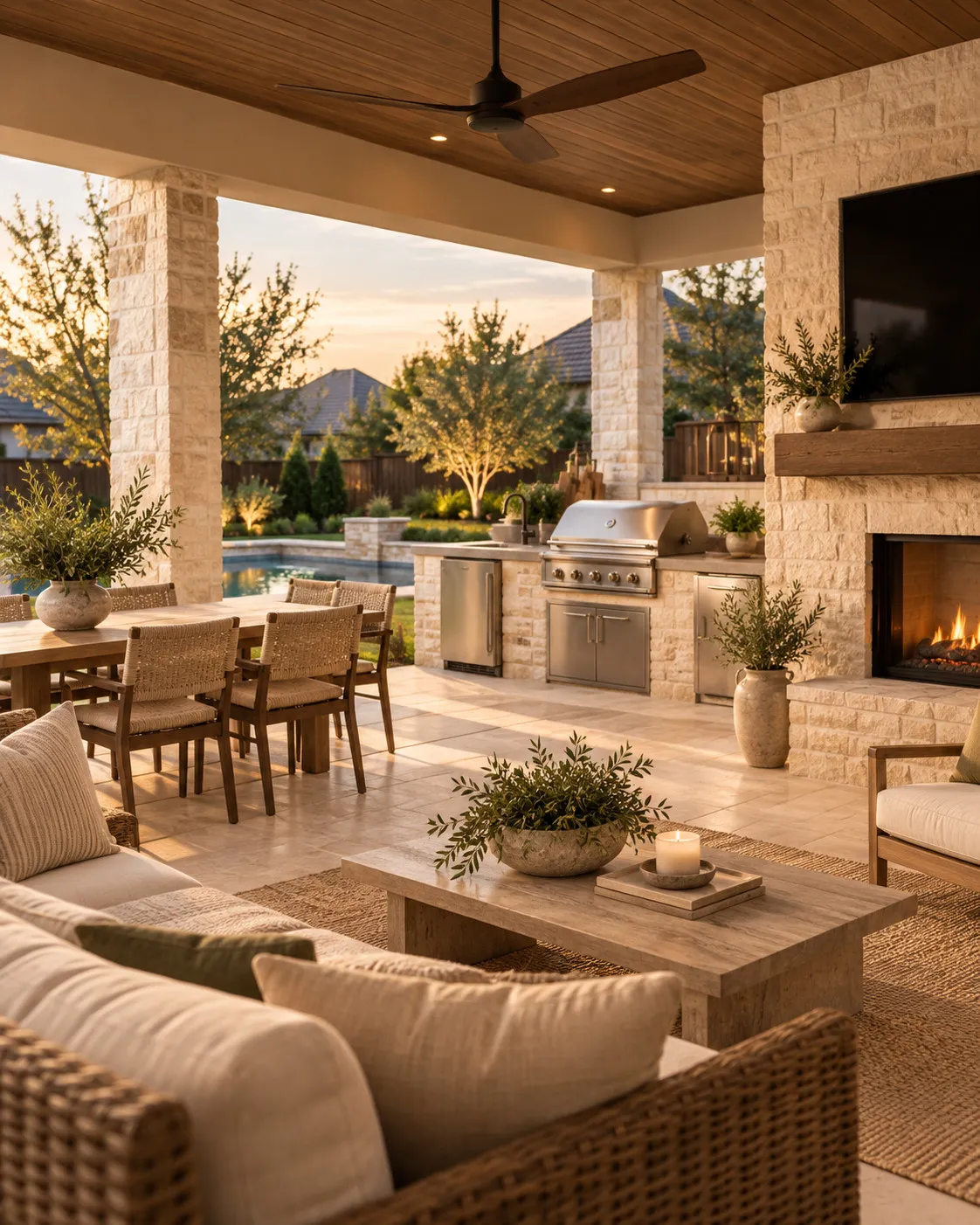
A North Texas backyard becomes much more useful when people have a comfortable place to gather. A covered patio can add shade and help define an outdoor living area, but the best plan considers sun, water, structure and how the home connects to the yard—not only the appearance of the roof.
Make the Backyard Part of Everyday Life.
In North Texas, a useful patio isn't just pretty. It needs to account for sun exposure, weather, drainage, your yard, the home’s architecture and how you plan to use the space.
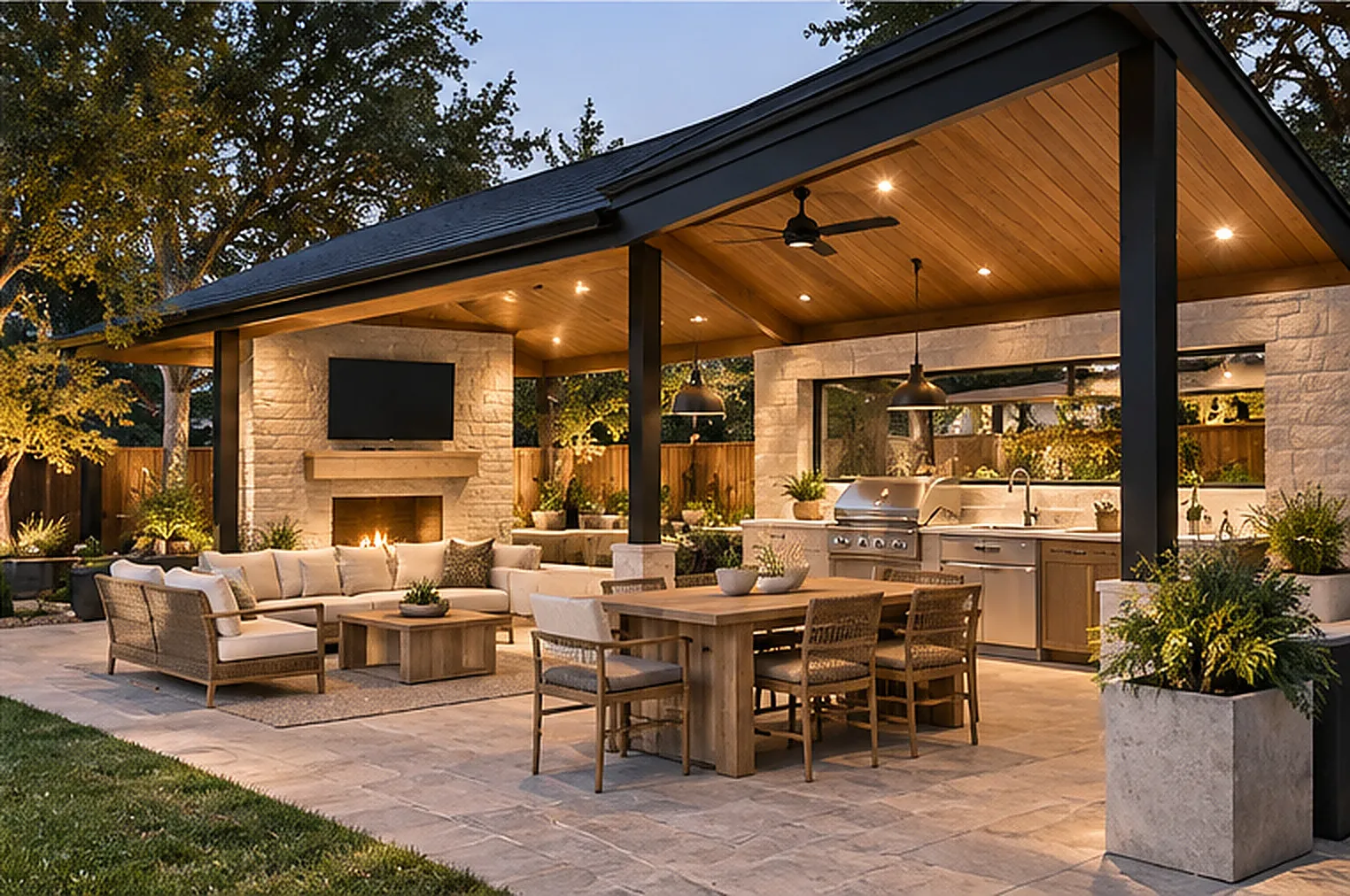
Let's Make Room for Living.
Outdoor Spaces Worth Staying In.
Covered Patios
Shade and shelter designed to complement the roofline and the way you use your yard.
Outdoor Cooking
Thoughtfully located prep, grilling and gathering areas; utility needs assessed during planning.
Gathering Zones
Comfortable seating, lighting, circulation and optional fire features where appropriate and permitted.
Finishing Details
Fans, materials, lighting and transitions that keep the space comfortable and low-stress.
A Backyard That Matches the House.
We look for practical connections between indoor and outdoor life: a patio surface that belongs beside the brick, stone or siding; a ceiling and shade strategy suited to the property; and seating that fits real family gatherings.
Plan for the Things Photos Don't Show.
Structure, footing conditions, setbacks, neighborhood rules, drainage, electrical/gas, inspections and local permit requirements may affect what can be built. We verify these details before making construction commitments.
Start with How You Want to Use It.
Coffee outside? Weekend grilling? Watching a game with friends? Give us the real-life picture. We'll explore possibilities, priorities and a design scope suited to the property.
Questions homeowners ask
Does a covered patio require a permit?+
Requirements vary by city, structure and scope. We check the applicable jurisdiction before work begins.
Can a patio roof match my house?+
Often there are design options, but roofline, structural and drainage conditions must be reviewed.
Do you design outdoor kitchens?+
Outdoor cooking layouts are within our initial outdoor-living scope. Actual utilities and installations require appropriate trade assessment and approvals.
Can I start with shade and add more later?+
A phased plan may make sense. Early planning helps avoid conflicts with future electrical, gas, drainage or other improvements.
What works best for Texas heat?+
Orientation, effective shade, airflow, appropriate materials and lighting are all worth evaluating. No single feature guarantees a particular temperature.
Can we add a ceiling fan or outdoor kitchen?+
Those features may be included in a properly scoped plan, subject to electrical, gas, plumbing and clearances where applicable.
Plan for Sun, Rain and Everyday Use
Watch where afternoon sunlight lands and where rainwater travels across the yard. Think about how far the patio is from the kitchen, whether the seating area needs room for dining, and where a fan or light would actually be useful. A patio that looks generous on a sketch may feel cramped once tables, chairs and walking paths are drawn to scale.
Our guide to planning a covered patio for Texas weather walks through these observations step by step.
The Connection to the Existing House Matters
Attached covers may affect roof lines, flashing, load paths and exterior drainage. Detached structures raise different foundation, setback and utility questions. Electrical work, outdoor kitchens, gas lines, ventilation and plumbing should be discussed as separate scope items when relevant. Any design is subject to the property and the authority having jurisdiction.
Practical Outdoor Materials
Material selections should match the exposure and desired maintenance: exterior-grade finishes, slip-conscious walking surfaces, ceiling materials suited to the setting, and lighting placed for useful evening visibility. We discuss what needs weather resistance and what can remain decorative.